Maker’s Marks Before the Brand
Maker’s marks linked objects to their source. See how that narrower historical purpose can help you shape a clear, honest identity for a creative venture.
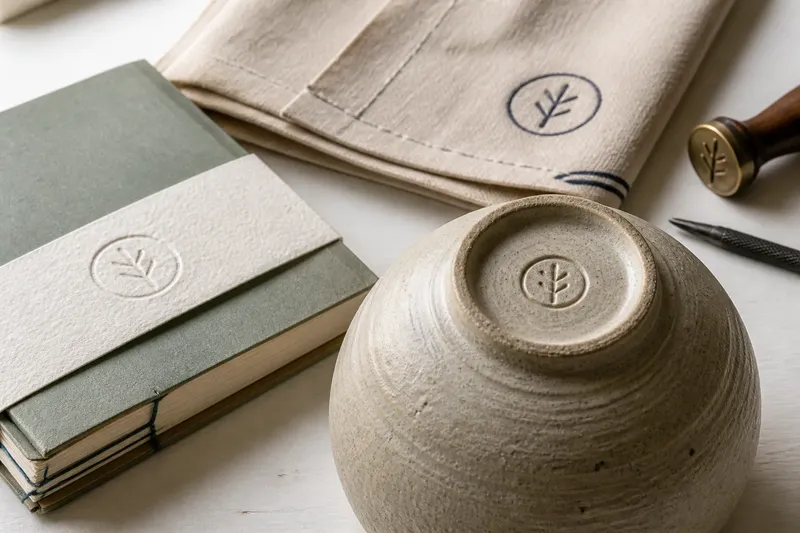
The common mistake with maker’s marks is treating them as miniature logos from another age. That shortcut obscures their more modest purpose: a mark could point from an object to a maker or workshop without carrying a whole story about the venture. Maker’s marks are useful to study because that distinction is so clear.
Maker’s marks linked an object to a source
A pot with an impressed sign offers a particular kind of clue: someone associated with its making chose to leave a mark on the object itself. The mark may identify an individual, a workshop or another source, but the object alone does not always tell us which. Its meaning depends on the mark, the material and the context in which it was used.
There is no single historical system behind every mark. A device pressed into clay, a symbol stitched into cloth and a sign cut into metal are different acts, shaped by different materials and customs. It is safer to compare those specific forms than to assume that all marks served the same purpose across trades and places.
One useful contrast remains: a mark attached to an object can help connect that object with a source, while leaving other questions unanswered. It need not explain what the maker offers, how the work is made or what a customer can expect. Those are separate messages, not hidden meanings that every historical sign must contain.
The object shaped what a mark could say
A mark’s material setting affected how it could be made and seen. An impressed mark belongs to the surface that holds it; an embroidered sign belongs to the cloth and its construction. The viewer encounters each in a particular place, often as a detail of the object rather than as a complete account of its maker.
This is where the historical comparison can help a new venture without turning into a design recipe. A mark on a handmade object may identify its source; a name on an invoice can clarify who sold it. Neither message has to carry the other’s full meaning.
Say you make hand-bound notebooks and want readers to identify the workshop behind them. You begin with a paper belly band, a short workshop name and a blind-embossed sign. You place the name beside the sign, then inspect the result on the band: if both remain legible and the source is clear, the mark and name are doing distinct work; if the impression is faint or the name cramped, you can remove the symbol or revise the layout before applying anything to the cover.
Repetition could connect a sign with its source
When the same mark appears on objects attributed to the same maker or workshop, viewers may learn to associate the sign with that source. The mark does not create the quality or reputation of the work. It gives recognition something visible to attach to.
That historical relationship is more interesting than copying the look of an old seal. A venture’s identity can make its source legible, but the source must be described honestly. If several people contribute to an object, a workshop name may be clearer than a mark that suggests one person made every part.
Avoid borrowing the authority of a guild, place or craft tradition unless the connection is real. Historical-looking ornament can suggest an origin that the venture does not have. A plain, accurate attribution is more useful than a convincing imitation.
What do maker’s marks tell us about identity?
Did every maker’s mark identify one person?
No single answer fits every mark or tradition. A sign might be associated with an individual, a workshop or another source, so avoid treating an unidentified mark as proof of personal authorship.
Why put a mark on the object itself?
An object-borne mark keeps its connection to the thing it identifies, even when the maker is not present. It may help a viewer recognise a source, but it cannot by itself explain the full process or history behind the object.
Can a modern venture use a historical-looking mark?
It can, but the style should not imply a false link to a place, guild or tradition. If the mark might create confusion about origin or ownership, seek advice from a qualified intellectual-property professional.
What is not worth the effort?
Recreating an elaborate seal simply to make a new venture look old adds detail without clarifying who made the work. Keep the historical reference only if it reflects a genuine connection or helps identify the source honestly.
Historical marks are not complete identity systems
A historical mark and a contemporary identity answer different kinds of questions. A mark may connect an object to a source; a venture may also need words to explain its offer, identify the seller and describe how the work is made. Treating the old sign as a complete branding model blurs that difference.
For a new venture, the most useful lesson from maker’s marks is not to put a symbol everywhere. It is to distinguish attribution from explanation: say who made or supplied the work, then provide any further context the reader needs in words. That keeps the historical comparison grounded in what a mark can actually show.
Maker’s marks are a reminder that a small sign can have a specific relationship with an object and its source. Start there, keep attribution accurate, and let the work—not borrowed historical styling—give that connection meaning.